Texas School Guardian Requirements, Explained
Two Texas programs put a trained, armed staff member on a campus; they run under different statutes with wildly different hours, and boards routinely plan around the wrong one. The rules also changed in September 2025 in a way that puts a recurring obligation on every district using the guardian route. Here is the whole picture, read out of the statutes rather than summarised from somebody's course page.
TL;DR
"Guardian plan" is not a statutory term. What people mean by it is a district authorising its own employees to carry under Penal Code 46.03(a)(1)(A), with those employees trained by an instructor holding the school safety certification created by Government Code 411.1901.
Two things have to be true before anyone carries: the person holds a valid Texas License to Carry, and the district has authorised them in writing. Training does not authorise anybody. Anyone with an LTC may take the course; only the board decides who carries.
The School Marshal route is a different animal: 80 hours through the Texas Commission on Law Enforcement with a psychological examination attached.
And since September 1, 2025, a good cause exception from the armed-officer requirement expires after one year and has to be re-evaluated and renewed.
What "Guardian Plan" Actually Means in Texas Law
The name causes half the confusion in this topic, because there is no statute called the Guardian Plan. Three separate provisions do the work, and knowing which does what is the difference between a board that writes a defensible policy and one that does not.
The authority to carry comes from the Penal Code. Section 46.03(a)(1) makes it an offence to possess a firearm on school premises "unless (A) pursuant to written regulations or written authorization of the school or institution". That clause is the entire legal basis. What permits a guardian to carry is the district's written authorisation, and nothing else.
The training standard comes from Government Code 411.1901, which does something narrower than most summaries claim. It directs DPS to create a school safety certification that qualified handgun instructors can add to their existing certification, and it sets the curriculum for that certification course: protection of students, interaction of license holders with first responders, tactics for denying an intruder entry into a classroom or school facility, and methods for increasing a license holder's accuracy with a handgun while under duress. Subsection (b) sets that course at not less than 15 and not more than 20 hours.
Subsection (c) is the operative one for staff. An instructor holding that certification may provide school safety training, covering those same subjects, to employees of a school district or open-enrollment charter school who hold a License to Carry.
Read that carefully, and one thing stands out: 411.1901 certifies the instructor. It does not appoint the guardian; it does not name who may carry, and it says nothing about churches. The statute was added by Senate Bill 1857 in 2013 and amended in 2015.
What Changed on September 1, 2025
This is the part with a deadline attached, and it is missing from every guide still written to the 2023 rules.
House Bill 3 added Education Code 37.0814 in 2023, requiring the board of trustees of each school district to determine the appropriate number of armed security officers per campus and to ensure at least one is present during regular school hours. The section was then amended twice in the 2025 session, both amendments effective September 1, 2025.
Two obligations now sit on any board that cannot meet the requirement directly.
A good cause exception, available where funding or qualified personnel are not available, expires on the first anniversary of the date it is claimed. On expiry, the board must reevaluate whether it can comply and, if not, renew both the exception and the alternative standard built under it. This is no longer a decision a board makes once.
Separately, the board must develop and maintain documentation showing how it has put the section into effect and complied with it, including documentation of any good cause exception, and provide it to the agency on request in the manner the agency prescribes.
If your district claimed an exception in the 2023 or 2024 cycle and has not revisited it since, that is the item to put on the next posted agenda.
Who counts as an armed security officer?
Six categories qualify: a school district peace officer, a school resource officer, a commissioned peace officer employed as security personnel under Section 37.081, a reserve deputy sheriff appointed under Local Government Code 85.004 who is a peace officer, a reserve police officer appointed under Section 37.0816 who is a peace officer, and an honorably retired peace officer who has kept their commission in active status and met the applicable Occupations Code requirements.
One note for charter leadership: 37.0814(a) is written to the board of trustees of a school district.
Guardian or School Marshal?
Both put an armed staff member on campus. Almost nothing else about them matches.
| Guardian route | School Marshal | |
|---|---|---|
| Statute | Penal Code 46.03(a)(1)(A) authorisation, trained under Gov't Code 411.1901 | Education Code 37.0811, licensed under Occupations Code 1701.260 |
| Training hours | Instructor certification course is 15 to 20 hours; staff training mirrors that curriculum | 80 hours of instruction |
| Delivered by | A qualified handgun instructor certified in school safety | TCOLE staff or a TCOLE-approved provider |
| Psychological exam | Not required by statute | Required, devised in consultation with psychologists; a licence is issued only on a passing result |
| Ammunition | Set by district policy | Must be loaded only with frangible duty ammunition approved by TCOLE |
| Carry method | Per the district's written regulations | Concealed, or openly if in a uniform identifying the marshal, or in a locked safe on premises |
| Identity | Per district policy | Confidential by statute and not subject to a public information request |
| Licence term | No separate licence | Expires August 31 following the second anniversary; renewal training capped at 16 hours |
| Who appoints | The board, in writing | The board, from among its own employees |
Two rows in that table decide more cases than the hour count.
The psychological examination is the real dividing line. Some boards want it and will accept the 80 hours to get it. Others need a solution this semester and cannot lose a teacher for two working weeks.
The frangible ammunition rule is the one nobody sees coming. Frangible rounds are prohibited on many indoor ranges, ours included, so a marshal's duty ammunition and their practice ammunition are two separate budget lines.
Neither route wins in the abstract, and that call belongs with your district's counsel rather than with a range.
Who Can Train, and Who Decides Who Carries
Here is where a lot of published advice has the sequence backwards, including advice we have written ourselves in the past.
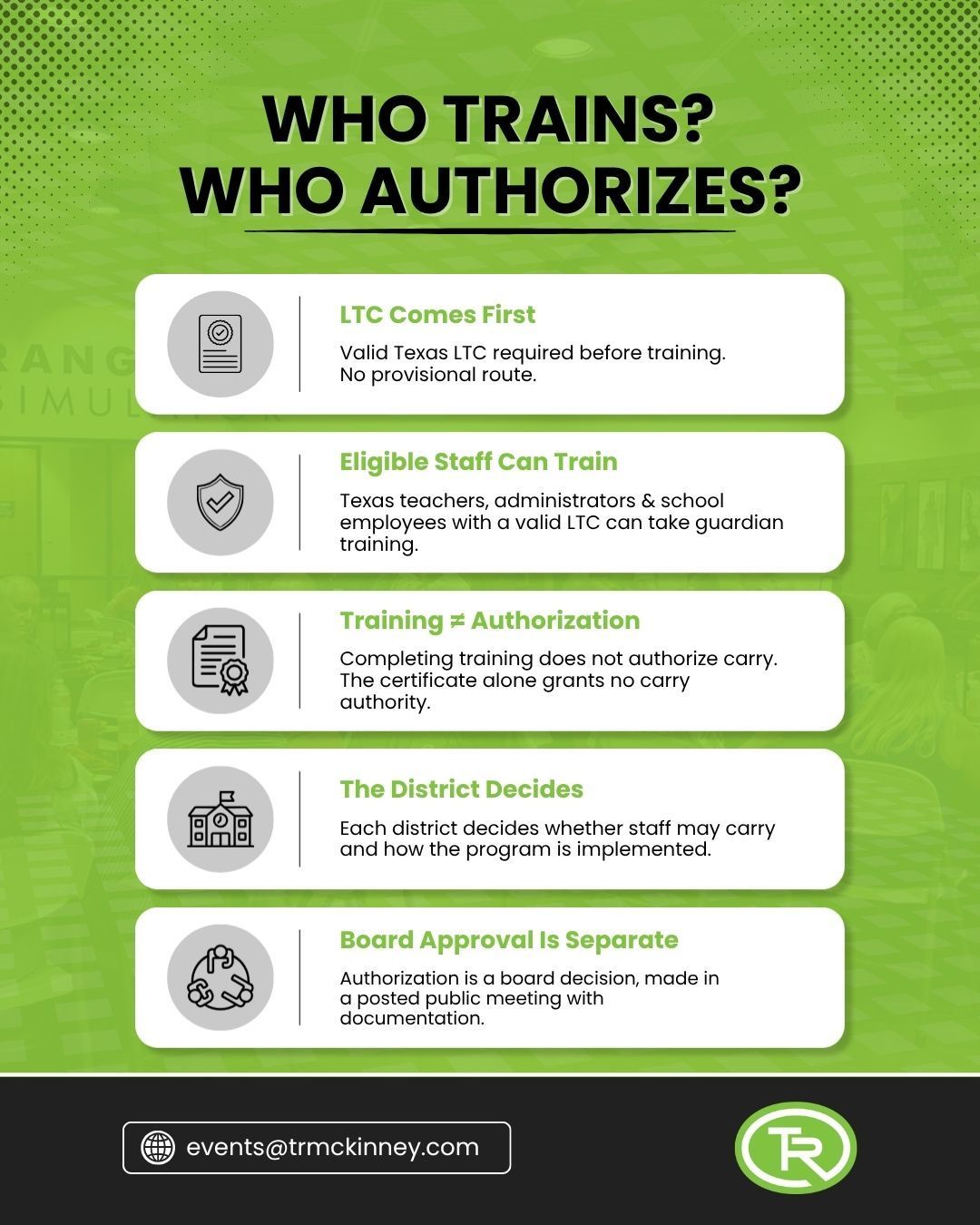
Any Texas teacher, administrator, or school district employee holding a valid Texas License to Carry can take guardian training. They do not need their district's permission to attend, and they do not need to be designated first.
The certificate itself authorises nobody to carry anything. Each district decides whether to allow staff to carry and how the program is implemented. Completing the course and being authorised to carry are two separate events, and the second one is a board decision made in a posted public meeting with documentation behind it.
That distinction matters in both directions. A teacher can arrive already trained and make the board's decision easier. A board can also train a group and still decline to authorise any of them, which is a legitimate outcome rather than a failure.
The one hard prerequisite is the licence. A valid Texas LTC has to be in hand before training begins, with no exceptions and no provisional route. If your team is not there yet, our guide to the licence requirements covers the sequence, the fee waivers most applicants miss, and the extra range hours an online classroom triggers.
What the Course Actually Drills
Guardian training is not a marksmanship refresher with a school theme. The curriculum in 411.1901 is built around the specifics of stopping a threat inside a building full of people who cannot protect themselves, and our two-day course works through:
- Protection of students
- Tactics for denying an intruder entry into a classroom or school facility
- Defending against an intruder using items commonly available in a classroom, and which items are worth keeping there
- Thinking and acting under stress
- Interaction with first responders
- Guidelines for carrying in a school
The first responder piece is the one people underestimate until they see it run. When officers arrive on an active scene, they are looking for an armed person, and an armed teacher who has never rehearsed that moment is in genuine danger of being read as the threat. It gets drilled for that reason.
The classroom-items material surprises people too, and it is the part teachers tend to talk about afterwards. Every classroom already contains things that slow an intruder down or change what a doorway can do, and most staff have never once looked at their own room that way. Working out which of those things are worth keeping to hand, and where, costs nothing and does not require anybody to be armed. That is why the course is genuinely useful to staff who will never carry, which is also how the client's own page frames it.
Classes run up to six students, which is small enough that nobody hides at the back.
The shooting standard is real
This is not a certificate you receive for attending. Our posted course requirements set a pre-qualification you must pass at 90 percent 225 out of 250 points) before you continue with the course.
The live-fire portion covers shooting under duress, shooting with hostage targets, clearing malfunctions, shooting while moving, and magazine changes. Minimum caliber is .38.
Bring a handgun, a holster, a magazine pouch, extra magazines, eye and ear protection, a range bag, and at least 200 rounds. Skip shorts, short skirts, open-toe shoes, tank tops, and low-cut shirts, for the same hot-brass reason that applies to any range visit.
The third day, which we recommend to every group, adds a Stop the Bleed class, more range time on holster draws and shooting around barriers while moving, and reality-based scenarios in our video simulator. That last one lets a team rehearse an intruder situation in a way you cannot safely stage any other way.
How Churches Fit, and the Rule About Badges
Churches sit somewhere different in the law, and the framing that a church runs "a guardian plan" is loose at best. Government Code 411.1901(c) speaks to employees of school districts and charter schools. It does not mention places of worship.
Two other provisions do the work instead.
A place of worship is not among the locations Penal Code Chapter 46 lists as weapons-prohibited, so a licence holder may carry at church unless the church gives effective notice otherwise. The church controls that, as any private property owner does.
Then there is the licensing question, and Occupations Code 1702.333 answers it. Chapter 1702, the Private Security Act, "does not apply to a person who is providing volunteer security services on the premises of a church, synagogue, or other established place of religious worship", and the same exemption covers premises where an event sponsored by a public primary or secondary school is taking place. The section defines volunteer security services as services regulated under the chapter and "provided without compensation or remuneration".
The word doing the work there is unpaid. Compensating someone for security work, the exemption goes away, and the licensing rules apply.
That catches more congregations than you would expect, and rarely as an outright salary. A stipend, a fuel allowance, a waived tuition at the church school, a free unit in the church-owned duplex: any of those can look like remuneration for the security role. Subsection (e) shows how narrowly the line is drawn, since it had to say explicitly that paying for a peace officer's civil liability insurance does not count as compensation. If the statute needed to carve that out, the general rule is tight. Churches running a mixed team of paid off-duty officers and unpaid volunteers should be clear with themselves about which person is in which category, because the answer changes what licensing applies to them.
There is also a rule almost no congregation knows about. A volunteer providing services under that exemption may not wear a uniform or badge containing the word "security", or one that gives the appearance of being a peace officer, personal protection officer, or security officer. Peace officers are carved out of that restriction. If your team ordered polo shirts with SECURITY across the back, that is the statute to read before the next service.
The exemption dates to Senate Bill 2065 in 2017 and was amended by House Bill 1133 in 2023, so it is older than most of the coverage suggests.
The Second Pathway Most Districts Miss
Buried in 37.0814(d)(2) is an alternative that gets almost no attention, and for some districts it fits better than either headline program.
A board claiming a good cause exception may build its alternative standard around a school marshal, or around a district employee or contractor who satisfies two conditions. The second condition is constant: that person carries on school premises in accordance with the district's written regulations or written authorisation under Penal Code 46.03(a)(1)(A).
The first condition offers a choice. Either the person has completed school safety training from an instructor certified under 411.1901, which is the guardian route described above, or, no later than the 90th day after beginning duties as a security officer, they complete training the district deems appropriate, in consultation with its police department or a local law enforcement agency, across seven named areas:
- Active shooter response, which must come from an instructor certified by the Advanced Law Enforcement Rapid Response Training Center at Texas State University in San Marcos
- School safety and emergency management
- Crisis intervention
- Incident command
- First aid administration
- Mental health
- Qualifications relating to the carrying or use of a firearm
That the ALERRT Center is named in the statute itself is unusual and worth knowing, because it means the active shooter component of that pathway cannot be satisfied by just any provider.
Notice also that first aid administration is a named requirement on that pathway. Districts building toward it are the ones who should be looking hardest at the third training day rather than treating it as an upgrade.
Getting a Guardian Team Trained in McKinney
The order of operations is the same for a district, a church safety team, or a business.
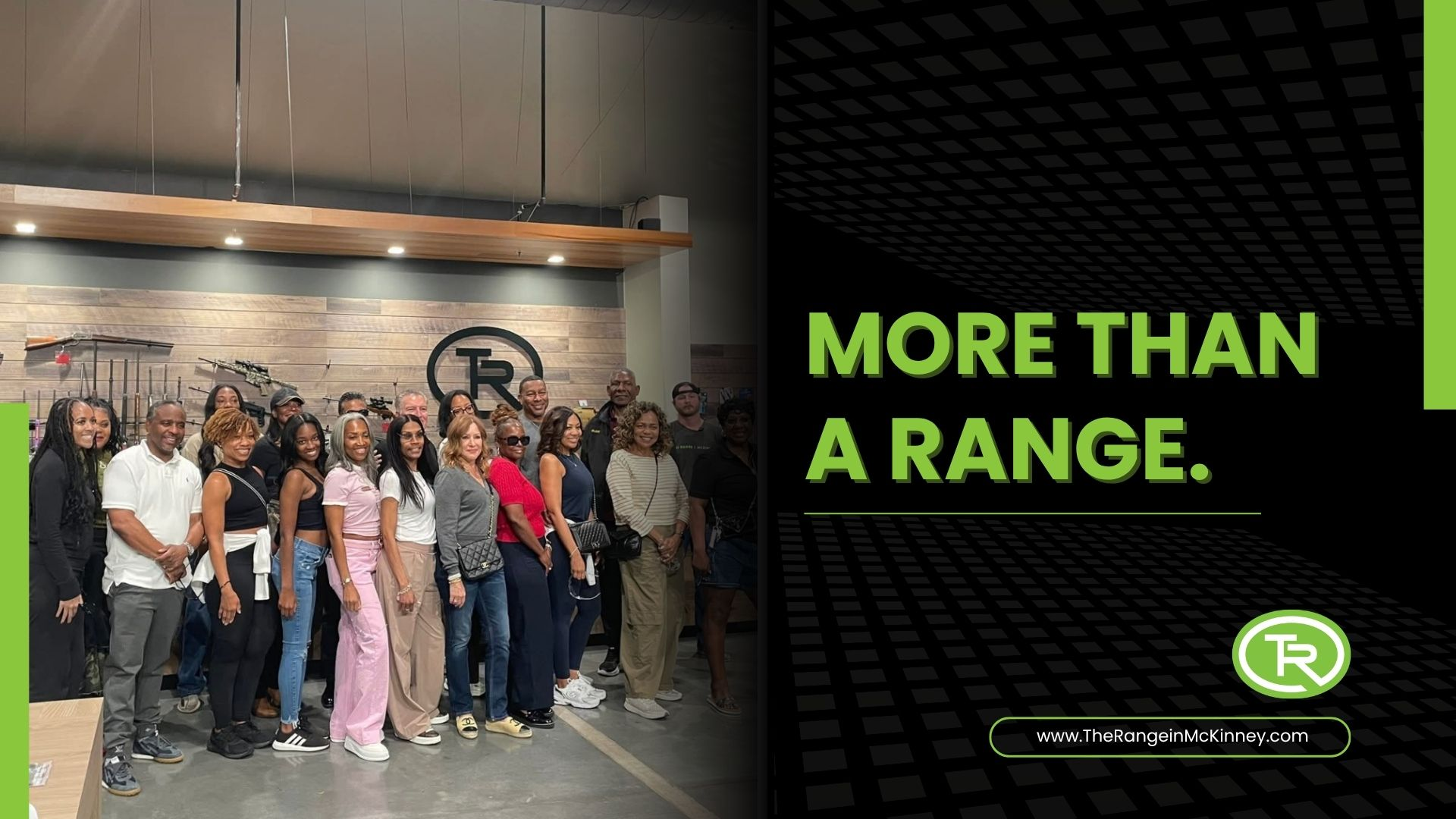
Get everyone licensed first, because the LTC is the one thing no course can substitute for. Then bring the whole team through together, which is worth more than sending people individually: a team that has rehearsed movement and communication with each other behaves like a team on the day.
Then take the policy question back to your board or leadership with counsel in the room, because the written authorisation is what actually permits anyone to carry.
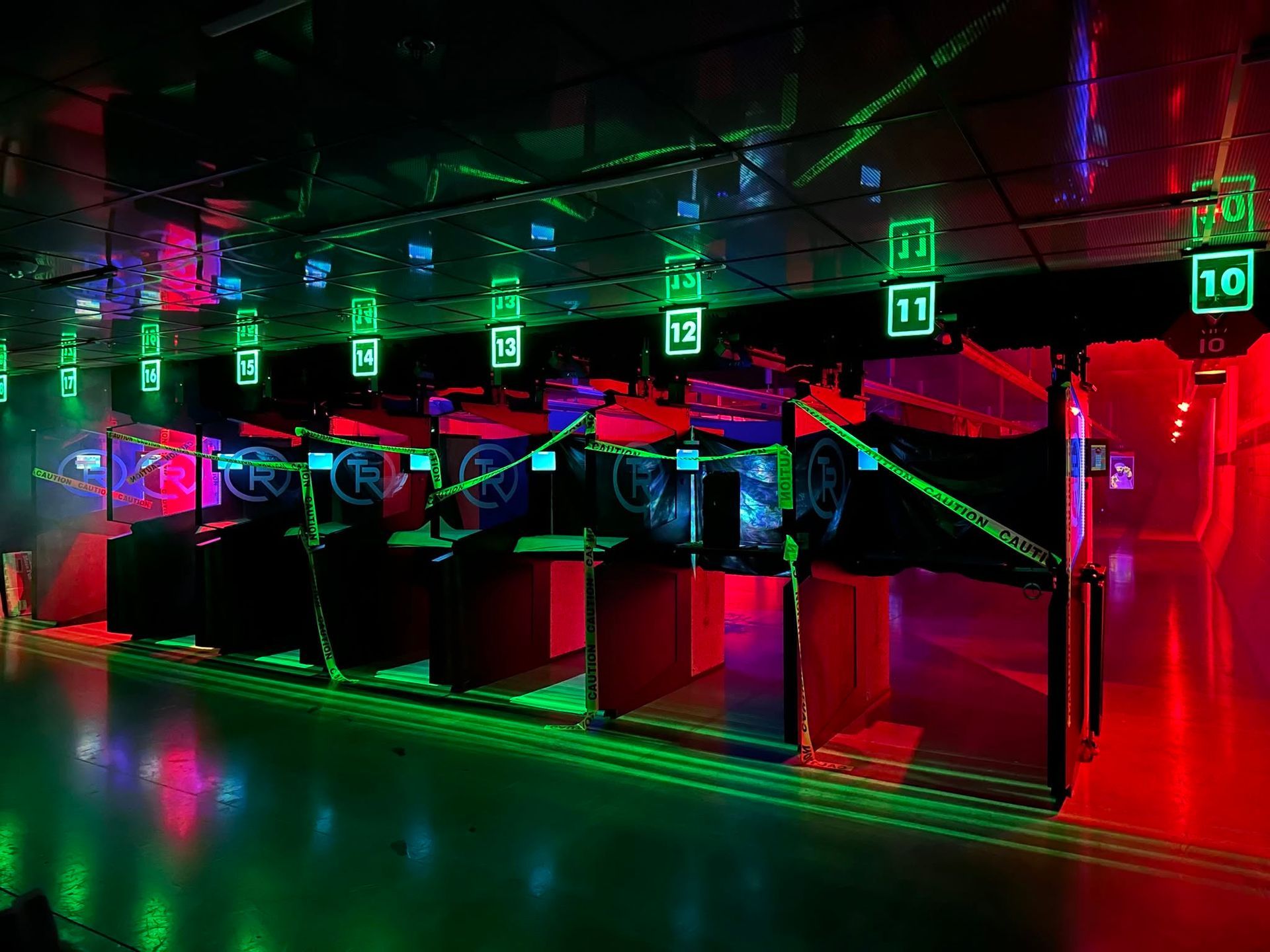
We run the two-day and three-day courses for schools, churches and business safety teams, in a private indoor range with a fresh air system that is never recirculated, and our training side handles the licensing end for anyone not there yet. Full course details are on our Texas Guardian Program page, or get in touch, and we will scope a course around your team's size and schedule.
The Range in McKinney is at 415 Industrial Blvd. McKinney, TX 75069.
Frequently Asked Questions
What are the school guardian requirements in Texas?
A valid Texas License to Carry held before training begins, completion of school safety training from a qualified handgun instructor certified under Government Code 411.1901, and written authorisation from the district under Penal Code 46.03(a)(1)(A). The licence and the authorisation are both mandatory.
What is the difference between a school guardian and a school marshal?
A marshal is licensed through TCOLE under Occupations Code 1701.260, completing 80 hours of instruction and a psychological examination, and must carry frangible duty ammunition. The guardian route uses a shorter course from a certified handgun instructor with no statutory psychological exam.
Does guardian training let a teacher carry at school?
No. The certificate does not authorise anyone to carry anything. Each district decides whether to allow staff to carry and how the program works, and that authorisation must be in writing. A teacher may take the course without district permission, but cannot carry without it.
Did the Texas school armed officer rules change in 2025?
Yes. Education Code 37.0814 was amended twice, effective September 1, 2025. A good cause exception now expires on the first anniversary of the date claimed and must be reevaluated and renewed, and boards must maintain compliance documentation for the agency.
Can a church run a volunteer security team in Texas?
Yes. Occupations Code 1702.333 exempts unpaid volunteer security services at a place of religious worship from the Private Security Act. Volunteers who are not peace officers may not wear a badge or uniform carrying the word "security" or resembling law enforcement.
The Range in McKinney
415 Industrial Blvd., McKinney, TX 75069
Tuesday–Saturday 10 a.m.–7 p.m. | Sunday 12 p.m.–6 p.m. | Closed Mondays